
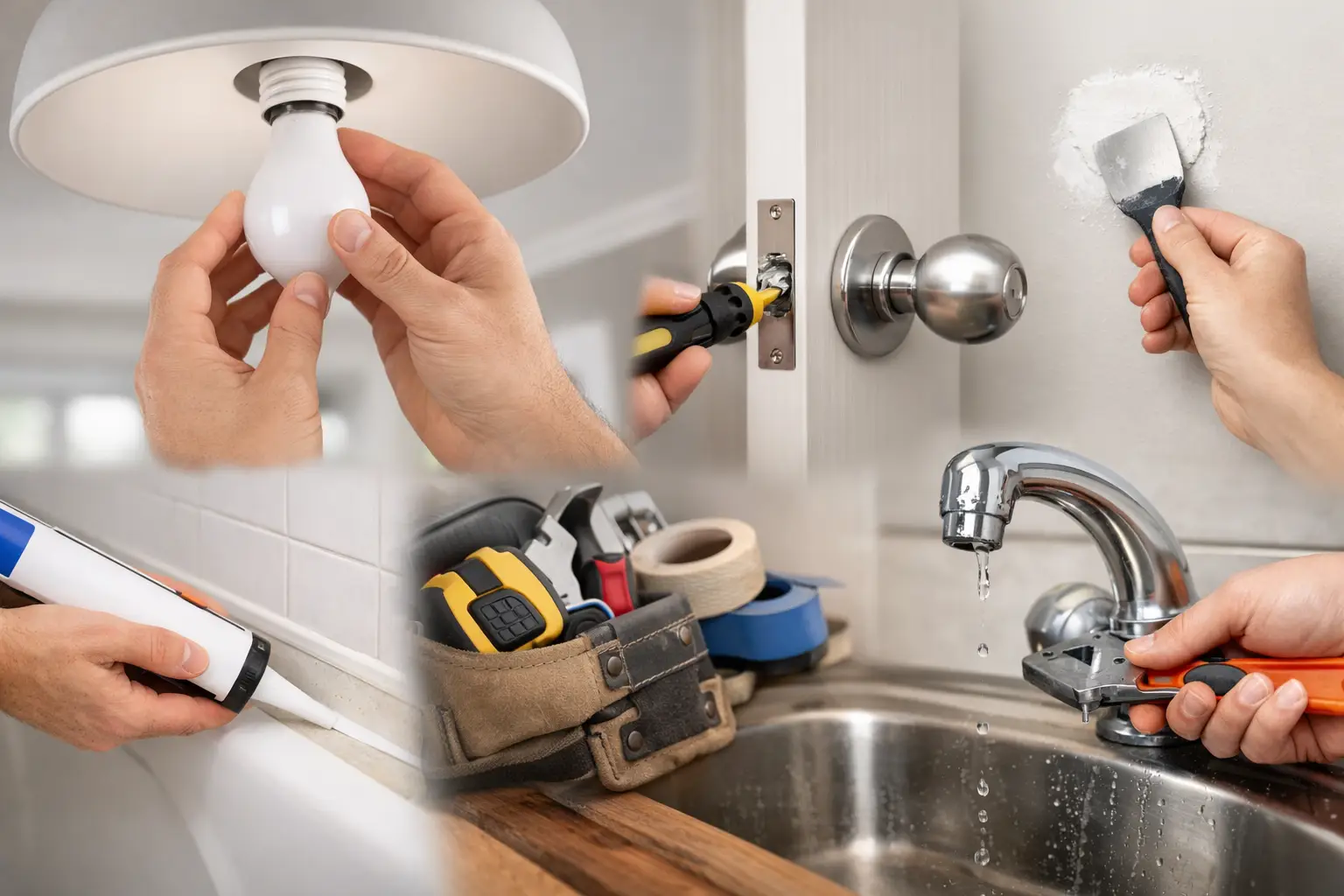
A loose cabinet hinge at 7:15 a.m., a dripping faucet by lunch, and a door that suddenly sticks when you’re trying to get out the door – that is usually how home maintenance shows up. The best quick home fixes are not flashy projects. They are the small repairs that stop daily annoyances from turning into wasted time, water damage, or a bigger service call later.
For busy homeowners and renters, the goal is simple: fix what matters fast, skip the overthinking, and know when a five-minute job is actually a warning sign. Some repairs are perfect DIY tasks. Others look easy but can cost more if they are handled too late or handled wrong.
What makes the best quick home fixes worth doing
A quick fix is only worth your time if it solves a real problem, holds up reasonably well, and does not create a second issue a week later. Tightening a loose screw, sealing a draft, or resetting a tripped outlet all make sense because they are low-risk and immediately useful.
On the other hand, quick cosmetic cover-ups can backfire. Painting over a water stain without finding the leak is not a fix. Shoving paper under a wobbly table leg works for dinner, not for long-term stability. The best quick home fixes buy you time, reduce damage, or restore normal use without pretending the root problem does not exist.
Best quick home fixes for everyday problems
Stop a running toilet before it wastes water
A running toilet is one of the most useful fast repairs because the cost adds up quietly. In many cases, the problem is a worn flapper, a chain that is too short or tangled, or a float that is set too high.
Take the tank lid off and watch one flush cycle. If the flapper is not sealing, replacing it is usually straightforward and inexpensive. If the chain catches underneath, adjust the slack. If water keeps rising too high, lower the float slightly. This is one of the best quick home fixes because the result is immediate – less noise, less waste, and one less thing to ignore.
If the toilet still runs after those adjustments, the fill valve may be failing. That is still repairable, but if you do not want to spend time testing parts, it is usually smarter to get it handled quickly.
Tighten loose cabinet hardware before it strips out
Kitchen and bathroom cabinets take constant abuse. Handles loosen, hinges shift, and suddenly a simple door starts sagging or scraping. This is a small repair that often gets put off for months, even though it takes minutes.
Use the correct screwdriver, tighten the screws carefully, and check whether the screw hole has become worn out. If the screw no longer grips, a longer screw or a proper filler repair may be needed. The trade-off here is simple: if you catch it early, it is a two-minute task. If you wait too long, the hinge can pull out the cabinet face and turn into a more annoying repair.
Fix a sticking door with basic adjustments
A sticking interior door can come from humidity, settling, hinge movement, or latch misalignment. Before assuming the door needs sanding, check the hinges first. Loose hinge screws are a common cause and one of the easiest fixes in the house.
Tighten the screws and open and close the door again. If the latch is rubbing, you may need to adjust the strike plate slightly. If the top or side of the door is swelling seasonally, that may be manageable for now, but repeated swelling can point to moisture issues worth paying attention to.
In places like Metro Vancouver, where wet weather can affect doors, windows, and trim, a sticking door is not always just a door problem. Sometimes it is a minor symptom of changing moisture conditions inside the home.
Reseal gaps that let drafts in
If a room always feels colder than it should, the issue may not be the heating system. Small air leaks around windows, doors, and trim can make a space uncomfortable and push up energy use.
Applying weatherstripping or a simple seal at an obvious gap is one of the best quick home fixes because it improves comfort right away. It is also one of the few repairs where the benefit keeps showing up every day. The key is not to overdo it. A poorly placed seal can interfere with door closure or trap moisture where it should not be trapped.
Silence a squeaky hinge properly
A squeaky door is a small problem, but it is exactly the kind of daily irritation that makes a home feel less maintained than it is. The fast solution is to clean the hinge area and apply a proper lubricant, not just whatever spray is nearby.
If the squeak returns quickly, pull the hinge pin, wipe off grime, and re-lubricate it before reinstalling. It is simple, but it works better than repeated surface spraying. This is a good example of a quick fix that should be done cleanly once instead of casually five times.
Re-caulk small gaps before water gets in
When caulk starts cracking around a tub, sink, or backsplash, the gap may look minor. It is not. Water has a way of finding those weak points and creating slow damage behind the visible surface.
Removing a short damaged section and reapplying fresh caulk is a practical fix if the area is dry and the failure is limited. If the old caulk is widespread, moldy underneath, or separating because something is shifting, a quick patch may not hold. In that case, a more complete repair is the better call.
Reset a tripped outlet or breaker safely
When one outlet stops working, people often assume the outlet itself is dead. Sometimes the issue is much simpler. A GFCI outlet may have tripped, or a breaker may have flipped after a temporary overload.
Check nearby bathrooms, kitchens, laundry areas, or garages for a GFCI reset button. Then check the electrical panel for a tripped breaker. This is one of the best quick home fixes because it can restore power in under a minute.
That said, if the breaker keeps tripping, the outlet feels warm, or you smell anything burning, stop there. Fast diagnosis is useful. Repeated resets without finding the cause are not.
Patch small wall dings before they multiply
Small dents, nail holes, and scuffs make a room look more worn than it is. A light patch and touch-up paint can clean up a wall quickly, especially before guests arrive, before a move, or before listing a property.
The trick is keeping the repair truly small. If a crack is widening, if drywall feels soft, or if staining is involved, the wall may be telling you something more serious. Cosmetic repairs save time only when the issue is actually cosmetic.
Unclog a slow drain before it becomes a full blockage
A slow sink or tub drain is one of the most common household warnings. Hair, soap buildup, grease, and debris accumulate gradually, which means you usually get a chance to act before the drain stops completely.
Removing visible debris and using a manual drain tool is often enough for a first response. This is usually a better move than pouring harsh chemicals down the drain, especially if you have older plumbing or repeated slowdowns. If the clog returns quickly, the blockage may be deeper in the line.
Secure loose trim, stoppers, and small hardware
Not every repair needs a project plan. Loose baseboard trim, a wobbling towel bar, a shifting doorstop, or a shaky shelf bracket can often be secured in minutes with the right fastener.
These are easy to dismiss because they do not seem urgent. But they are exactly the kind of unfinished detail that compounds into a home full of minor frustrations. The best quick home fixes often live in that category – small things that restore order fast.
When a quick fix is the wrong fix
Speed matters, but not more than getting it right. If water is coming through a ceiling, if an outlet sparks, if a door frame is shifting noticeably, or if a faucet leak has already damaged the cabinet below, you are past quick-fix territory.
The same goes for recurring problems. If you have tightened the same hinge three times, cleared the same drain twice this month, or reset the same breaker more than once, the issue is no longer random. It needs a proper repair, not another temporary workaround.
That is where a practical service has real value. For busy households and small business operators, the time you spend diagnosing a half-fix can cost more than the repair itself. QuickHand fits that gap well by handling straightforward problems without turning the process into a project.
How to choose which fix to do first
Start with anything that involves water, safety, or daily function. A running toilet beats a wall scuff. A loose handrail beats a squeaky hinge. A draft near a front door matters more than a misaligned closet latch.
After that, think in terms of cost if ignored. The smartest quick fixes are usually the ones that prevent waste, stop wear, or keep a small issue from spreading. You do not need to finish everything in a weekend. You just need to handle the repairs that save the most time and trouble first.
A well-kept home is rarely the result of big dramatic projects. More often, it comes from handling small issues while they are still small. That is why the best quick home fixes matter – they keep your day moving and your home from quietly getting harder to manage.