
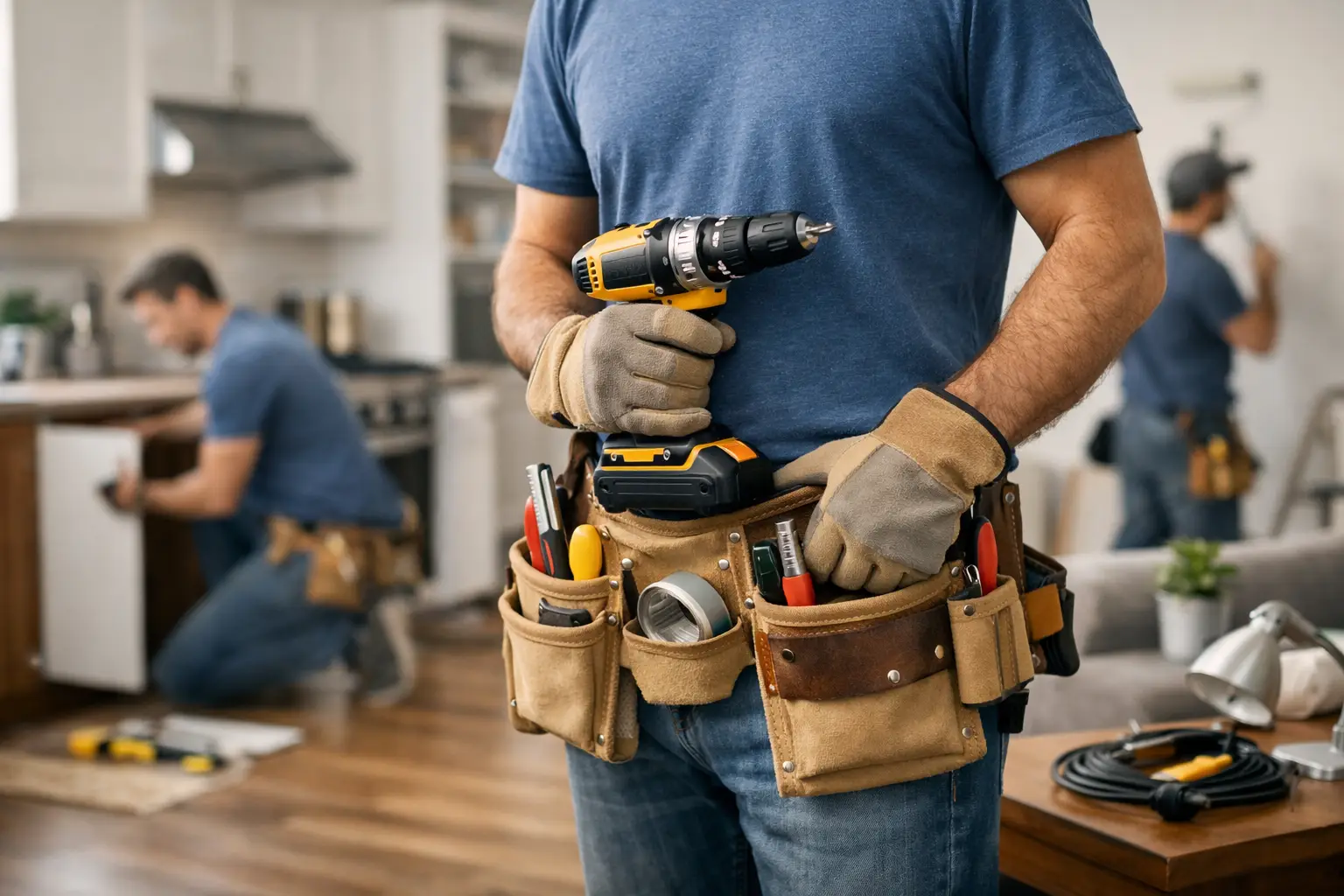
A door that will not latch, a faucet that keeps dripping, shelves still sitting in the box, blinds that need mounting before Monday morning – this is usually where people start asking what jobs can handymen do, and whether one call can take care of several small problems at once. In many cases, the answer is yes. A good handyman is there for the practical jobs that do not need a full specialty contractor but still need to be done properly.
That matters if you are busy, managing a property, or trying to keep a small business space functional without spending days booking separate trades. The real value is not just the repair itself. It is saving time, reducing hassle, and getting a list of everyday issues handled in one visit.
What jobs can handymen do?
Handymen typically handle non-structural repairs, basic installations, routine maintenance, and punch-list work. Think of the jobs that are too technical to ignore but too small to justify bringing in a large crew. They often work across several categories, which is why they are useful when a property has a mix of minor issues.
The exact scope depends on local rules, the provider’s experience, and whether the task requires a licensed trade. That is the key distinction. A handyman is usually the right fit for straightforward work with a clear fix. Once a job involves major electrical changes, new plumbing lines, structural alterations, or code-heavy work, it usually moves out of handyman territory.
Common repair jobs a handyman can handle
Most handyman calls start with small repairs that have been put off for too long. These are the jobs that interrupt daily life but rarely feel urgent enough until they pile up.
Drywall patching is one of the most common. Small holes, dents, scuffs, and minor wall damage from moving furniture or old hardware are usually simple handyman work. The same goes for caulking touch-ups around tubs, sinks, and backsplashes where old sealant has cracked or shrunk.
Door and hardware repairs are another standard category. A handyman can often fix sticking interior doors, replace knobs, adjust hinges, install deadbolts, or realign latches. If drawers are loose, cabinet doors are crooked, or closet tracks are not moving smoothly, those are also typical service calls.
Basic fence and gate fixes may also fall within scope, especially when the work is minor. Tightening loose boards, adjusting a sagging gate, or replacing simple hardware can often be done quickly. The same logic applies to weatherstripping, trim repair, baseboard replacement, and other finish carpentry touch-ups.
Installation work that saves time
A lot of handyman work is not repair at all. It is installation. This is where busy homeowners and small business operators get the biggest time savings, because the work is often straightforward but annoying to coordinate.
Wall-mounted TVs, curtain rods, shelves, mirrors, artwork, and closet organizers are all common jobs. These tasks sound easy until measurements are off, anchors fail, or the wall material changes from drywall to concrete. A handyman brings the tools and knows how to mount things securely.
Furniture assembly also lands here. Desks, shelving units, bed frames, storage racks, and office furniture can eat up hours, especially in a business setting where downtime matters. A handyman can often assemble, place, and adjust everything in one appointment.
Appliance-related installations depend on the appliance and the connection. Swapping out a range hood filter, installing a microwave bracket, replacing a showerhead, or mounting a bathroom accessory is often fine. Installing a new gas appliance or changing major utility hookups is a different category and usually requires a licensed professional.
Maintenance jobs that prevent bigger problems
A reliable handyman is often most useful before something fails. Preventive maintenance is less dramatic than repair work, but it is what helps a home or small commercial space stay functional.
This can include gutter cleaning at accessible heights, replacing worn weatherstripping, resealing around windows and doors, tightening loose fixtures, and checking for visible wear in high-use areas. Minor exterior touch-ups can also matter in a wet climate. In places like Metro Vancouver, moisture-related wear shows up fast, so staying ahead of small cracks, failing caulk, and loose exterior trim can prevent larger repairs later.
Seasonal maintenance is another area where handyman services make sense. A property might need hose bib covers removed, patio hardware tightened, door closers adjusted, or small exterior fixes completed before weather changes. None of these jobs are major on their own, but together they can take half a weekend.
Can a handyman do plumbing or electrical work?
This is where people need a clear answer. A handyman can often do very basic plumbing and electrical-related tasks, but there is a line.
For plumbing, simple fixture replacements are often reasonable. Replacing a faucet, installing a new showerhead, fixing a running toilet, swapping a sink sprayer, or addressing a minor leak at an accessible connection may be within scope. But if the job involves opening walls, moving pipes, replacing drain lines, or diagnosing a hidden plumbing issue, it is time for a licensed plumber.
For electrical, handymen may handle simple tasks like replacing light fixtures, installing a new ceiling fan where wiring already exists, or swapping outlet and switch covers. In some areas, even these jobs may require specific licensing, so the provider should be clear about what they can legally do. If the work involves new circuits, panel changes, rewiring, troubleshooting outages, or anything that raises code or safety concerns, that belongs to a licensed electrician.
The practical rule is simple: if the task is a like-for-like replacement and the conditions are straightforward, a handyman may be able to help. If the job changes the system itself, bring in a specialist.
Interior and exterior jobs handymen often take on
Inside the home or office, handymen are often called for paint touch-ups, trim replacement, grout repair, tile reattachment, minor flooring fixes, and childproofing or accessibility installs. They may also help with smoke detector replacement, bathroom hardware, wall repairs, and closet upgrades.
Outside, common jobs include mailbox installation, pressure washing, minor deck repairs, fence hardware replacement, exterior fixture mounting, and small siding or trim touch-ups. Exterior work depends heavily on access, weather, and condition. A handyman is usually a fit for maintenance and minor repair, not major rebuilds.
This is one reason it helps to think in terms of scope rather than category. A handyman can do work in many parts of a property, but usually on jobs that are compact, contained, and practical to complete without engineering, permits, or large-scale demolition.
When a handyman is the right choice
A handyman is the right choice when you have several smaller jobs, one moderately simple repair, or installation work that needs to be done correctly and quickly. If you are looking at a to-do list instead of a single large project, a handyman is often the most efficient option.
This is especially true for rentals, offices, and retail spaces where delay creates friction. One service visit can often cover patching a wall, adjusting a door, mounting shelving, replacing hardware, and taking care of a few maintenance items at the same time. That is usually faster and more cost-effective than booking multiple trades.
QuickHand fits this kind of need well because the goal is not to complicate the job. It is to get practical work done with minimal back-and-forth.
When to call a specialist instead
A handyman is not a substitute for every trade. If a wall is load-bearing, water damage is spreading, a roof is leaking, an electrical problem is causing breakers to trip, or plumbing work involves opening floors or walls, you need someone licensed for that system.
The same applies to permits and code-sensitive work. Kitchen and bath remodels, major tile jobs, full-room flooring, structural carpentry, HVAC work, and large exterior repairs often need a contractor or specialized trade. Trying to force those jobs into a handyman visit can create delays instead of saving time.
The smartest approach is to describe the job clearly and ask where the line is. A dependable provider will tell you what they can do, what they cannot, and where a specialist makes more sense.
How to tell if your job is handyman work
A simple test helps. If the job is small to medium in size, does not change the structure of the building, does not require major system modifications, and can usually be finished in a short visit, it is probably a handyman job.
If you can point to the problem and say, fix this, install this, patch this, adjust this, or replace this, that is usually a good sign. If the job starts with figure out why the whole system is failing, you may be outside handyman territory.
The best handyman services are practical about this. They do not oversell. They show up, handle the work they are equipped to do, and keep the process simple.
If you are staring at a growing list of home or workplace fixes, the useful question is not whether each item is big enough to matter. It is how much smoother things run once they are finally done.